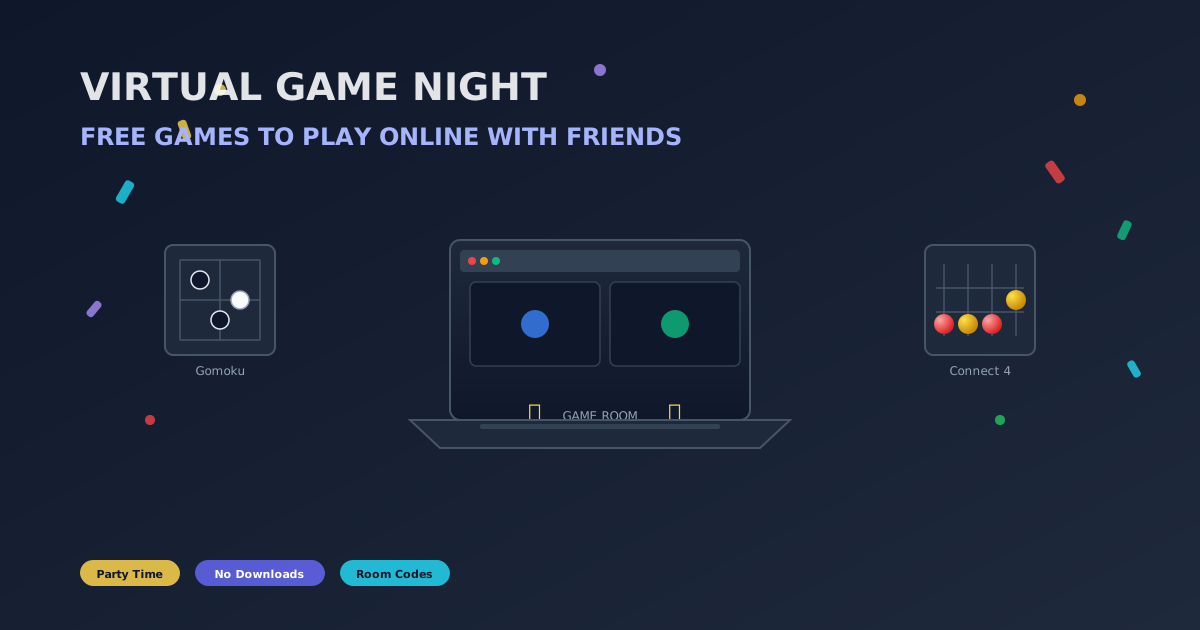
Virtual Game Night Games: Play Online Free with Friends

Discuss this article with your favorite AI assistant
Direct Answer: The best virtual game night games to play online free are the site's five no-login room games — Gomoku, Tic Tac Toe, Connect 4, Checkers, and Rock Paper Scissors — plus hot-seat favorites like Snakes and Ladders and Ludo that work over a video call via screenshare. Every room game works the same way: the host creates a room, gets a 5-character code, and shares it; players join from their own browsers with no login or download. The room system does the heavy lifting — it keeps the board in sync, enforces turns, and even restores players after a Wi-Fi blip — so a host can focus on running the night instead of running the tech.
What a Virtual Game Night Needs
A successful virtual game night has three ingredients, and only one of them is the games:
- A way to talk. Video call or voice chat — this is where the trash talk and the laughter happen. The games supply the competition; the call supplies the company.
- Games that start instantly. The number one night-killer is setup friction. If players need accounts, downloads, or installs, someone will drop out before the first round. No-login browser games remove that risk entirely.
- A host. Someone to pick the game order, share the codes, and keep the night moving. A good host turns a pile of games into an evening; the playbook below is exactly how.
The site's multiplayer system was built for exactly this use case. The launch announcement in Online Multiplayer Launch: Play with Friends, No Login explains the philosophy, and How Online Game Rooms Work: Room Codes Explained covers the mechanics — codes, room lifecycles, and the five supported games. Everything you need for a night is already in those two systems.
The Five Instant Room Games
These five games connect players across any distance with nothing but a code:
- Connect 4 — the ideal night-centerpiece. Two-to-five-minute games, easy rules, real depth. Perfect for a bracket-style elimination round. Start a match at the Connect 4 room.
- Gomoku — the deep thinker's game. Its 15x15 board supports long, patient duels, and rooms even allow a third player for a three-way rotation. See How to Play Gomoku Online for the rules.
- Checkers — the classic. Forced captures create dramatic cascades that are perfect for a crowd watching the shared screen. The online room plays traditional rules, and the local game offers a forced-jumps toggle.
- Tic Tac Toe — the lightning round. Thirty seconds a game, so it is ideal for warm-ups, sudden-death tiebreakers, or letting the non-gamers in the group feel like champions.
- Rock Paper Scissors — the social glue. A best-of-7 series between two friends is the loudest, most fun event of any night. The psychology of it is covered in The Psychology of Rock Paper Scissors.
All five run in a browser tab, need no login, and sync instantly over WebSocket — no refresh buttons, no "are you seeing my move yet?" dead air. That instant feedback is what makes the night feel live rather than laggy.
Hot-Seat Games to Screenshare
Room games cover two-player matchups, but game nights often want everyone involved at once. That is where screenshare + hot-seat comes in: the host shares their screen on the video call, and everyone calls out moves while the host taps them in. The site's pass-and-play games — Snakes and Ladders (2-4 players) and Ludo (2 or 4 players) — are perfect for this, because the whole board is visible to everyone at once and the rules are simple enough for the crowd to call out. The full pass-and-play lineup is ranked in Best Pass-and-Play Games: Hot-Seat Multiplayer on One Device.
Screenshare also solves the "odd player count" problem. With five people and two-player games, run a mini-tournament: two players in a Connect 4 room while a third screenshares and commentates, then rotate. With four people and no paired opponents, a 4-player Snakes and Ladders screenshare gets everyone at one virtual table.
Structuring the Night: Rotation, Best-of, Brackets
The games are only half the night — the structure is the other half. Three proven formats:
- Round-robin rotation: everyone plays everyone in a quick game (Tic Tac Toe or RPS, best-of-3), with points for wins. Simple, inclusive, and everyone plays everyone.
- Bracket elimination: seed players and run single-elimination Connect 4 or Checkers matches. Best for 4 or 8 players, and it builds a real climax — the final match gets the whole call watching.
- Casual rotation: the host cycles through games every 15-20 minutes: a couple of RPS series, a Connect 4 bracket, a 4-player Snakes and Ladders screenshare, then a long Gomoku duel to close. No scoring, no pressure, maximum variety.
Whichever format you choose, the host's job is the same: have the next game's room code ready before the current one ends. A thirty-second code swap beats a five-minute "okay, now everyone open this link" scramble every time.
A Host's Playbook: Codes, Turn Order, and Rematches
Ten minutes of host prep makes the whole night smooth:
- Pre-create your rooms. Create the Connect 4 and Gomoku rooms before the night starts and keep the codes in a chat pinned at the top of the call. When a game ends, the next code is already visible.
- Assign first moves fairly. First-mover advantage is real in Connect 4 and Gomoku, so alternate who starts each match — best-of-3 with swapped starts keeps it fair. The tournament guidance in Connect 4 Tournament Strategy covers this.
- Plan rematches. The best moments of a game night are the "one more" games. Keep a running best-of tally per matchup so the night naturally ends with a deciding match rather than a whimper.
- Handle dropouts gracefully. Rooms tolerate brief disconnects via a player token, and empty rooms expire on their own after about an hour — so a player who vanishes doesn't leave a mess behind. Just recreate a room if someone truly bails.
- Schedule the breaks. A two-hour night wants a five-minute break around the halfway mark. Browser games make this painless — everyone just closes the tab.
That is the whole playbook. The room system handles legality, turn order, and sync automatically, which leaves the host free to do the only job that matters: keeping the energy up.
Matching Games to Your Group
Not every group wants the same night. Here is how to match the games to the crowd:
- Gamers and strategy lovers: lead with Gomoku and Checkers. Long, thoughtful duels give them something to sink into, and the 15x15 Gomoku board supports epic matches. Let them close the night with a best-of-5 Gomoku series while the rest of the group spectates.
- Casual players and non-gamers: lead with Tic Tac Toe and RPS, then graduate to Connect 4. The rules take ten seconds to explain and the games are forgiving enough that nobody feels lost. A 4-player Snakes and Ladders screenshare is the perfect "everyone at once" finale.
- Mixed groups: run the bracket format with Connect 4 — it gives strong players a real contest and weak players a short, sweet outing. Rotate matchups so the two strongest players meet in the final rather than the first round.
- Kids and families: screenshare Snakes and Ladders or Ludo. The dice-race format keeps attention, the board is visible to everyone, and the site's free no-login games for kids roundup has more family-friendly options to rotate in.
The principle is simple: the first game of the night should be the easiest to learn, and the last game should be the one the group enjoyed most. Everything in the middle is variety — which is exactly what the five room games plus the hot-seat screenshares are built to provide.
Common Virtual Game Night Problems (and Fixes)
Even a well-planned night hits snags. Here are the three most common ones and the one-line fixes:
- "The code didn't work." Almost always a typo — 0 for O, 1 for I. Codes skip those characters on purpose, but double-check the fifth character if joining fails. The definitive fix: recreate the room and paste the fresh code into the chat.
- "Someone's internet dropped." Rooms tolerate short disconnects and restore the player via their stored token. If they are gone for good, rotate someone in and recreate the room when it is their turn again.
- "The night is dragging." You picked a slow game for a casual crowd. Swap to Tic Tac Toe or RPS for a few lightning rounds to reset the energy, then bring back the deeper game only if the group asks for it.
Every one of these has a fix that takes under a minute, because the whole system is designed around instant reset. A failed room, a dropped player, or a dull stretch costs you one code — never the night.
Frequently Asked Questions
What are good free games for a virtual game night?
The five no-login room games — Connect 4, Gomoku, Checkers, Tic Tac Toe, and Rock Paper Scissors — are the best starting point, since players join with just a code. For everyone-at-once games, screenshare a 4-player Snakes and Ladders or Ludo hot-seat game.
How do I set up a virtual game night with friends?
Start a video call, then use the site's room system: create a room, share the 5-character code, and have friends join from their own browsers. No login or download is needed on anyone's side. See the host's playbook above for the full flow.
Can more than two people play together in a room?
Rooms are primarily two-player, though Gomoku rooms support up to three players. For bigger groups, screenshare a hot-seat game like Snakes and Ladders (up to 4 players) or run a bracket tournament with paired room matches.
Do virtual game night games need an account?
No. Every room game on this site works with zero sign-up — players join with a code and a browser. That is the entire design philosophy, and it is why game nights can start in seconds instead of after a signup gauntlet.
What if someone's internet drops during a game?
Rooms tolerate short disconnects and restore the player's seat via a token when they return. If a player is gone for good, recreate the room — empty rooms expire automatically, so there is nothing to clean up.
Summary and Key Takeaways
- A virtual game night needs a call, instant-start games, and a host — not accounts, downloads, or installs.
- The five room games (Connect 4, Gomoku, Checkers, Tic Tac Toe, RPS) cover two-player matchups with code-based joining.
- Screenshare a 4-player Snakes and Ladders or Ludo game to get everyone at one virtual table.
- Structure the night with rotation, brackets, or casual cycles — and pre-create rooms so codes are always ready.
- The room system handles sync, turns, and reconnects automatically; the host's only real job is energy.
Host Your Night Tonight
Create a room, drop the code in the call chat, and watch the first match start. Free, instant, no login for anyone.
Open the Online LobbyBuilding the night's game list? Start with Best 2-Player Games Online, No Login.