Best Strategy Games by Skill Level: From Tic Tac Toe to Chess

Discuss this article with your favorite AI assistant
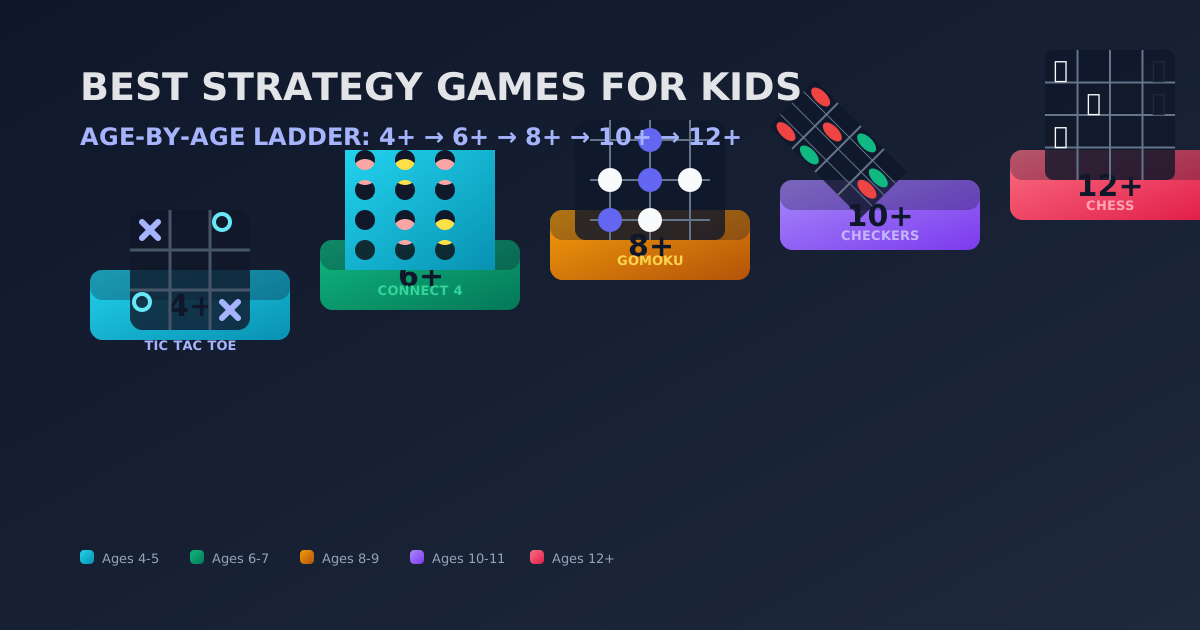
Direct Answer: The best strategy games by skill level: first games — Tic Tac Toe and Snakes and Ladders (turns, counting, and the first "think one move ahead"); next step — Connect 4 and Ludo (blocking, sequences, and reading an opponent); deeper boards — Checkers and Gomoku (forced captures, look-ahead, and spatial planning); full calculation — Chess and Mancala (branching strategy and counting ahead). Every game on this list is free, no-login, and browser-based, so a family or a pair of beginners can play on any device. Ads may appear around the page, not during a move.
Why Match the Game to Skill, Not a Birthday?
Handing a complete beginner chess is a lesson in frustration. Handing a strong player Tic Tac Toe is a lesson in boredom. Strategy games teach when the difficulty sits just ahead of current ability — a principle the guide to free no-login games for families and beginners also uses. The games on this site span that ladder, from thirty-second Tic Tac Toe rounds to full chess games.
Matching matters for another reason: strategy is a skill, not a talent. It develops in stages — first turn-taking, then immediate consequences, then planning ahead, then considering the opponent's plans, and finally branching calculations. Jumping stages skips the foundation. The bands below follow that ladder. Fun AI Games is a general-audience site for adults, families, and beginners. It is not directed at children under 13 and does not have a Kids Mode.
A quick note on the bands: they are guides, not gates. Someone who has played board games for years may be ready for Connect 4 immediately. Someone who has never played a strategy game may need Tic Tac Toe first, whatever their résumé says. Watch for boredom (too easy) and frustration (too hard).
First Games: Turns, Counting, and the First "If... Then"
At this stage the goal is not winning — it is learning that a game has a structure: you move, I move, we follow rules, and the game ends with a result. Two games fit:
Tic Tac Toe is the essential starter. It teaches turn-taking, blocking (your opponent is about to win — stop them), and the first genuine "if... then" thinking. The teaching method is in Tic Tac Toe for Beginners: Teaching Strategy Through Play, which shows how to talk a new player through planned moves instead of dropping X's at random.
Snakes and Ladders adds counting and number sense: every die roll is a count-the-squares exercise, and the jumps introduce consequences — a ladder leaps forward, a snake sends you back. Full rules: How to Play Snakes and Ladders Online. For a mixed-skill table, this is the game that keeps everyone on the same board.
Next Step: Blocking, Sequencing, and Reading an Opponent
Once a player can hold a short sequence in their head — and start asking what the other person is trying to do — they are ready for true strategy games:
Connect 4 is the perfect next step after Tic Tac Toe. Same "make a line" instinct, plus stacking, columns, and watching your threats and theirs at once. Choosing between making your own winning line and blocking theirs is the core strategic act. Patterns are in Connect 4 traps and winning patterns.
Ludo adds the group dimension — up to four players — which means turn order, shared space, and waiting while someone else moves. Luck and strategy mix, which keeps a losing streak from feeling personal. Rules: How to Play Ludo Online. For one-device play, see the pass-and-play games guide.
Deeper Boards: Forced Captures and Look-Ahead
These games punish a mistake several moves later — and that delay is what builds patience:
Checkers is the classic bridge from casual to serious play. Forced captures mean every jump has consequences you cannot ignore. Beginner guide: How to Play Checkers Online. Tournament history, including the solved 2007 Chinook result, is in the history of checkers.
Gomoku (five-in-a-row) is the spatial thinker's game. The board is open, patterns are everywhere, and the strategy is position — building threats in more than one direction. Easier to learn than chess, much deeper than Tic Tac Toe. Guide: Gomoku opening theory.
Full Calculation: Multi-Branch Strategy
These are the games where one position branches into dozens of lines:
Chess is the complete package: openings, middlegame tactics, endgames. Motifs — forks, pins, skewers — are in Chess Tactics for Beginners. For structure, start with 7 Chess Opening Principles.
Mancala is the calculation game. Simple pits and stones; every move is a chain you count in advance. It trains mental arithmetic without feeling like a drill. Strategy: Mancala rules of thumb. Basics: How to Play Mancala.
How to Introduce a New Strategy Game
The game is only half the lesson — how you introduce it matters:
- Play openly for the first three rounds. Narrate: "I'm putting my X here because they could win there." Thinking becomes visible, and the other player copies it.
- Let them win sometimes — and name it. "You blocked me, then you took that square — that's why you won." The win should be explainable.
- Stop while it is still fun. Two or three rounds is plenty at the first-games stage. End the session wanting more.
- Graduate deliberately. When Tic Tac Toe feels solved, move to Connect 4. When Connect 4 feels solved, move to Gomoku or Checkers.
All of these games run free with no login. Ads may appear around the page, not during a move. The no-account reasoning is in the family and beginner games guide. For group play on a shared screen, the same ladder works as a rotation; see best board games for group and family play.
What the ladder does not show is the emotional skill each game quietly teaches. Tic Tac Toe teaches losing a round and immediately asking for a rematch. Checkers and Chess teach playing on after a mistake five moves ago. Ludo teaches that luck is real and not personal. Those lessons transfer off the board. The games are the vehicle.
These games are also fun at adult strength. The virtual game night guide explains how to run a night where one pair plays a lighter game and another pair plays a tougher one — same room, everyone at the right level.
Frequently Asked Questions
What is the best first strategy game for a beginner?
Tic Tac Toe. It teaches turns, blocking, and one-move-ahead thinking in under a minute per round. Step-by-step: Tic Tac Toe for Beginners.
What is the next step after Tic Tac Toe?
Connect 4. It adds stacking and forces you to watch your own threats and your opponent's at the same time.
Is chess too hard as a first serious game?
It is a poor first game and a good later one. Start with the basics from How to Play Chess after blocking and planning have already been learned on simpler boards.
Are these games free, and do they require an account?
Yes, they are free to play in the browser with no account. Ads may appear around the page, not during a move. Details: the family and beginner games guide and the Privacy Policy. Fun AI Games is not directed at children under 13.
How long should a session last?
Short and consistent beats long and rare. Ten to fifteen minutes for first games, up to half an hour for deeper boards, and stop while it is still fun.
Which games work best when skill levels differ?
Ludo and Snakes and Ladders are the most forgiving because chance does some of the leveling. For a tighter contest, give the stronger player a handicap — for example, Tic Tac Toe without a center opening.
Summary and Key Takeaways
- First games: Tic Tac Toe and Snakes and Ladders — turns, counting, first "if... then" thinking.
- Next step: Connect 4 and Ludo — blocking, sequencing, reading an opponent.
- Deeper boards: Checkers and Gomoku — forced captures, look-ahead, spatial planning.
- Full calculation: Chess and Mancala — branching strategy and counting ahead.
- Introduce games by playing openly, naming why someone won, and graduating deliberately.
Find the Next Game on the Ladder
Free, no-login strategy games for every skill level. Pick a game, open a tab, and play in seconds — no setup, no accounts.
Play Snakes and Ladders Play Connect 4Looking for shared-screen group picks? See Best Board Games for Group and Family Play.